Among the advancements happening around us in the world of science, the most popular one in today’s time is Artificial Intelligence.
Artificial Intelligence has entered almost every field, ranging from literature to science.
Photography is also evolving with the times.
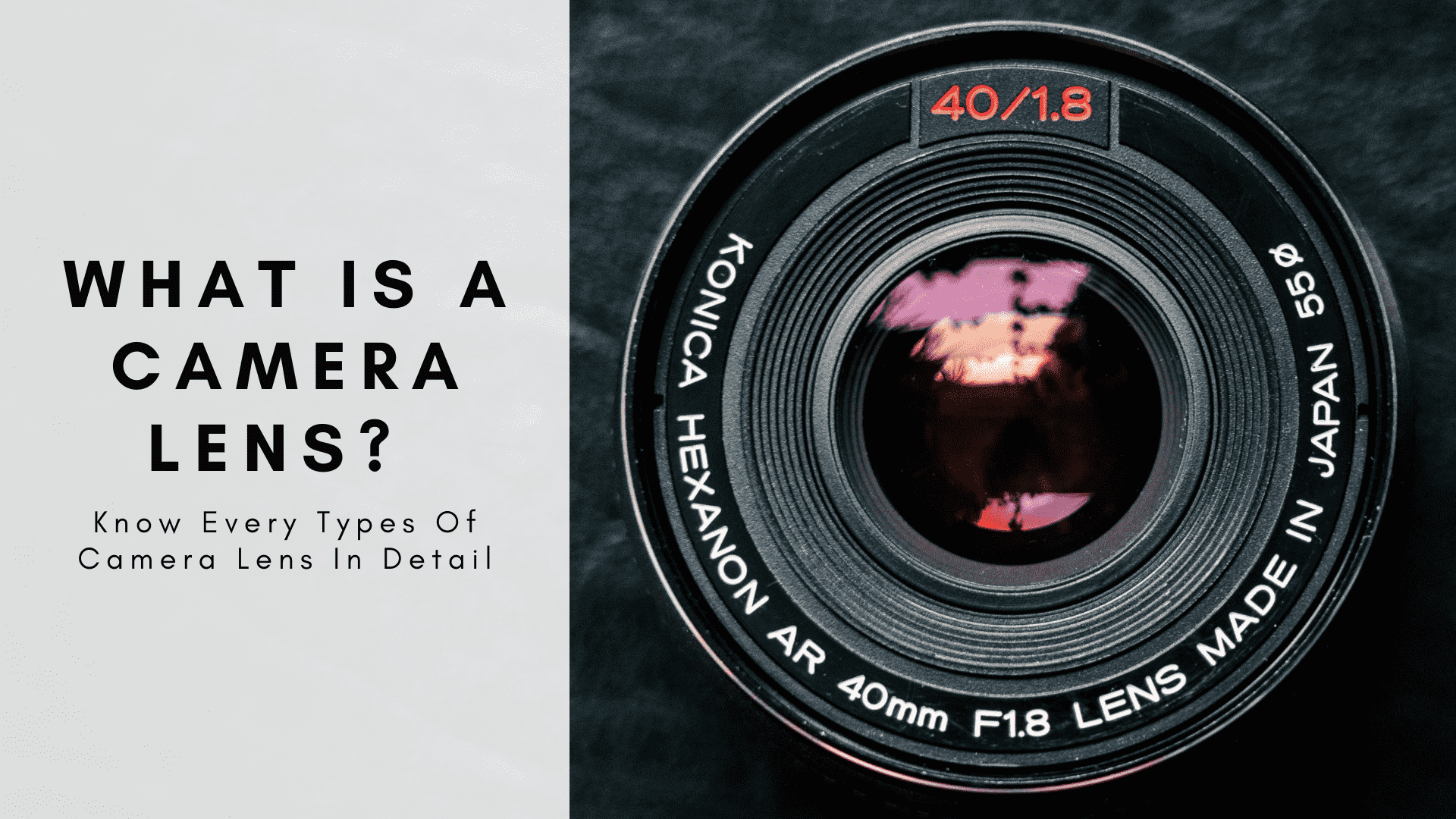
There are now AI-powered cameras available in the market, which can change the way photographers capture and create images.
There is just a single tap required, which can adjust the technical settings, manual settings, and even provide various suggestions on how to improve your image.
Using AI can automatically adjust lighting, remove noise, enhance various features, and make your image almost professional-looking.
On the other hand, various photographers also argue that the addition of AI in photography takes away the art and the intent behind the image.
According to traditional photographers, every frame and every image reflects the choices made by the photographer to get that result, whether it is timing, composition, or what emotion to capture.
The main argument is that AI is based on algorithms, and it is designed to prioritise perfection over emotion or authenticity.
So, in this article, let us explore the differences between AI and traditional photography and discuss the pros and cons of each.
What is AI Photography? Understanding the New Revolution
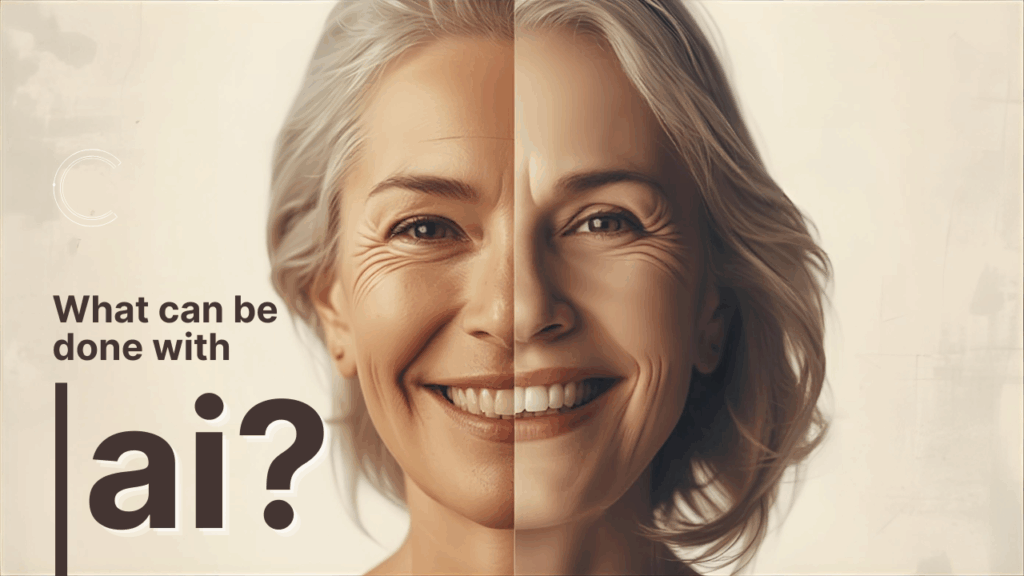
Initially, AI was just about simple image correction, but now, with time and advancement, we have a full-blown AI photography revolution.
Now the machines don’t just assist, they can even create art on their own.
In AI Photography, the AI uses artificial intelligence and deep learning to gain an understanding of the subjects, settings, and enhances and edits on the basis of the same.
AI, unlike traditional photography, which depends on skill, timing, intuition, or emotion, depends on algorithms and the knowledge gained from millions of images.
It is programmed to identify the perfect settings, whether it is the lighting or the framing of the subject, to get the best possible results.
How AI Photography Actually Works in 2026
There are built-in AI chips in the cameras and smartphones available, which can detect how you are shooting, whether it is a landscape, a portrait, or a night scene.
After this, it can suggest or automatically optimize the settings like ISO, shutter speed, focus, and others.
There are also AI-driven editing tools in the market that can efficiently remove noise, correct exposure, and most of all, even fill in the missing details using predictive models.
There are even some systems that are powered by AI that don’t even require a camera, just the correct prompt to generate a lifelike picture.
Types of AI Photography: Generation vs Enhancement
Now, AI photography is further divided into two categories, namely AI generation and AI Enhancement photography.
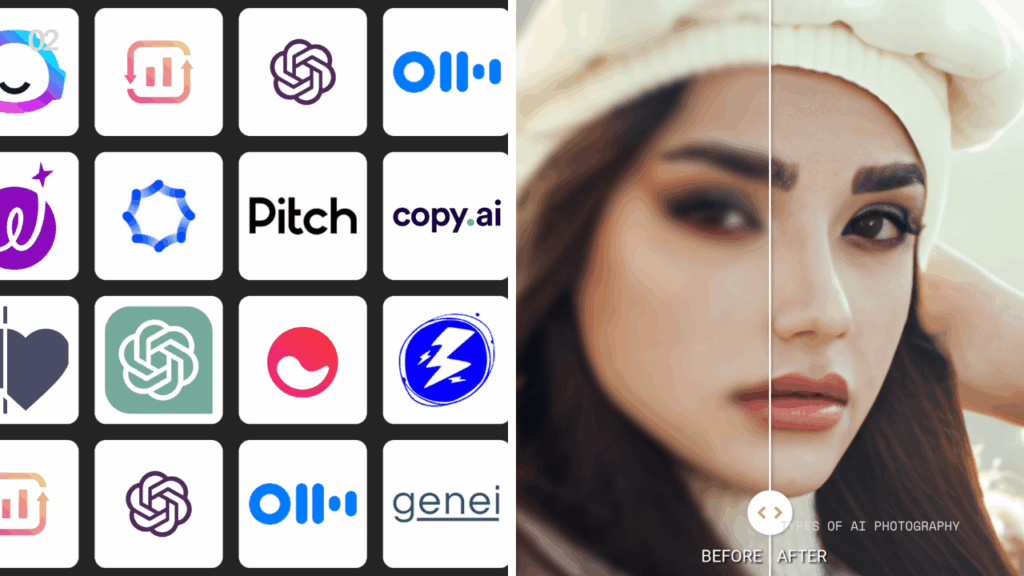
AI-generated photography, as the name suggests, is about fully generating new, hyper-realistic images based on creative and precise prompts.
This uses text-to-image technology in order to generate these images.
There are a variety of AI generative models nowadays, which include Midjourney, DALL-E 3, Firefly, Stable Diffusion, etc.
On the other hand, AI-enhanced photography focuses on the enhancement or improvement of the real images captured by photographers.
There are tools like Luminar NEO, Topaz Photo AI, Adobe Firefly, etc, which can analyse and refine your images by making a few changes.
These changes can include the adjustment of tones, sharpening of tones, or even reconstructing the missing details.
Popular AI Photography Tools Explained

There are several tools that are leading the revolution, such as Adobe Firefly, Topaz Photo AI, Luminar Neo, etc.
These are the programs that include the sky replacement, smart retouching, background generation, and many more.
The smartphones, such as Google Pixel, Apple, and Samsung, integrate AI directly into the camera software to get automatic scene optimisation.
Traditional Photography: The Foundation That Still Matters
Traditional photography will always be the timeless core of photography, no matter what revolution comes.
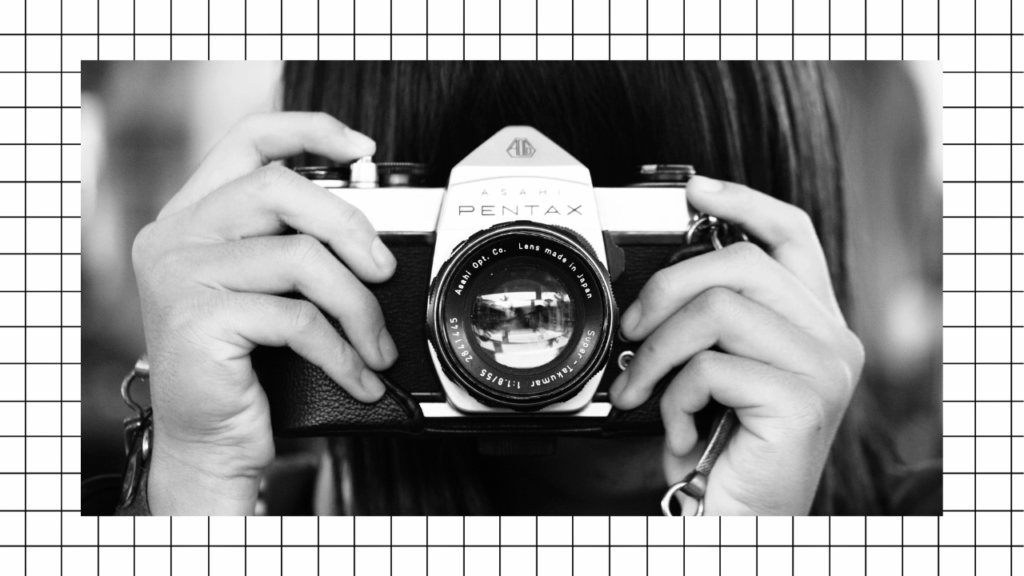
Before the algorithms, AI, and other technologies, photography was just about the skills, intuition of the photographer, and capturing the right moment and emotions.
Now, with the growth of technology and many other aspects, traditional photography still holds a special place in the hearts of those who value authenticity and creative control.
It still reminds us why the human touch is important and still matters; this preserves the soul and emotion in the image. Traditional photography is still and always will be the backbone of every great image.
What Defines Traditional Photography Today
Traditional Photography doesn’t necessarily mean using film and darkrooms, but it just means that it is about manual control and creative decision-making.
It is all about the decisions about various aspects of photography, such as the focus, composition, exposure, etc These choices can shape your image and tell a story.
Every photograph represents the photographer’s vision and not anything by the algorithm or pre-programmed.
Traditional photography is defined by human control, creativity, and manual precision.
Skills Traditional Photography Requires
Traditional photography demands the right and deep technical understanding, as well as artistic touch and awareness.
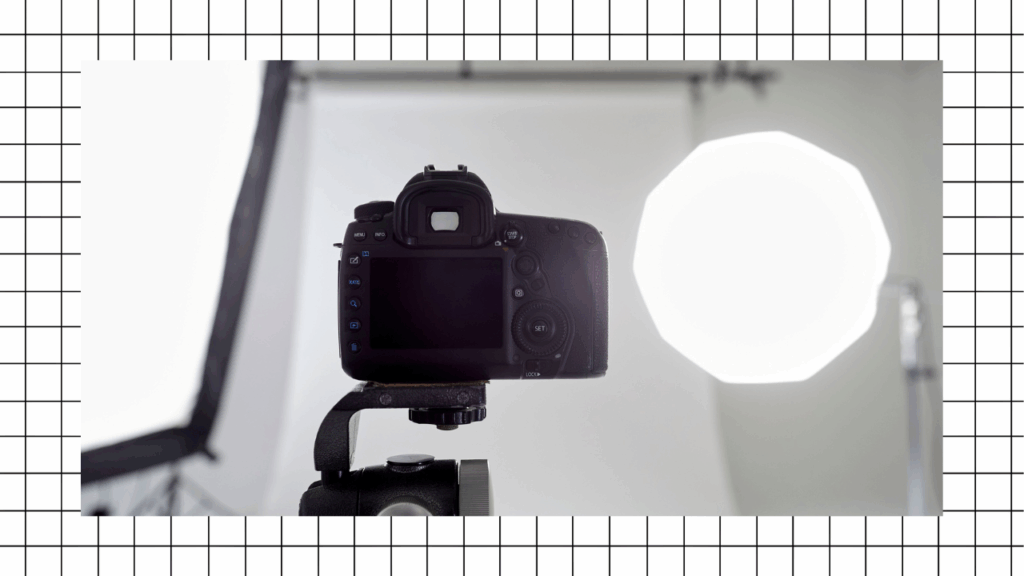
It also requires knowledge about various settings of the camera and the lenses, such as aperture, shutter speed, ISO, etc.
The skills required are not only technical but also emotional.
You need to be able to anticipate the best moment and frame the pictures properly.
Traditional photography also requires discipline in skills, creativity, and, most importantly, patience and an artistic eye.
Why Traditional Photography Isn’t Going Anywhere
There may have been changes and advancements in the field of photography, but there is no replacement for traditional photography.
Every manually captured image has the perspective of the photographer, the thought process that is depicted in all the aspects of the photograph, such as lighting, framing everything.
Still, there are many enthusiasts and professionals who enjoy shooting manually and value the sense of control.
With traditional photography, there is also a different kind of creative satisfaction one gets.
Traditional photography isn’t just surviving, but it is evolving alongside AI.
AI Photography vs Traditional Photography 2026: The Complete Truth
Technical photography and AI-powered photography both have their own strengths and weaknesses.
Let’s look at the comparison between the two on the various parameters, such as the quality, time, cost, creative freedom, etc.
Image Quality: Pixel Perfect vs Creative Vision
First, let’s talk about the major problem people face when they get their image using any AI tools it is image quality.
Here are a couple of points that you need to understand before you pick any type of photography.
Sharpness and Technical Quality
AI photography promises perfection. The algorithms that create the AI automatically optimise the colour, sharpness to produce near-perfect images.
AI offers professional-level quality with minimal effort.
Traditional photography is more on the side of personality rather than perfection.
There are some imperfections in traditional photography, but it can give personality to the images.
The imperfections in details such as a bit of grain, a soft blur, uneven shadows, etc, can reflect on the mood, the place, and the emotion.
Authenticity and Emotional Impact
AI can generate images that might look real, but mostly lack the emotional factor and can seem distant emotionally.
AI can miss the whole context behind it.
Traditional Photography, on the other hand, can capture the genuine emotion in the scene from the real tension, laughter, and the vulnerability of the moment.
Traditional photography can add a personal touch to your image.
Control Over Final Results
AI can make the decision for you, it can adjust the lighting, colour, or framing automatically.
Photography with AI can be faster, but it can also be a bit less personal.
Traditional photography, on the other hand, can give you all the creative control over the final product.
Here, it is completely your choice what story you want to portray.
Time Investment: Speed vs Mastery
This is also one of the very important points you need to understand before you start creating your art.

No matter using AI or just by yourself.
Learning Curve Comparison
AI has made photography a lot more accessible than ever.
It has made it easy for everyone, even a beginner, can take stunning images with the help of AI.
Traditional Photography, on the other hand, requires a lot more learning, discipline, and understanding of how things work, as well as composition, to capture a good picture.
Time to Create a Single Image
With AI, it can barely take a few seconds to generate an image, whether it is through AI cameras or prompt-based generation.
AI offers the advantage of time.
Traditional photography works at the pace of life; it’s about the right light, right mood, and it can take time to find it.
Post-Processing Time Requirements
There are various AI-based modern editors, such as Luminar Neo, Runway, and Adobe Firefly, etc that can automatically edit the images and retouch various settings using AI and algorithms.
Now, traditional photographers prefer manual post-processing in software such as Lightroom or Photoshop, where they can bring their vision to life.
Cost Analysis: Initial Investment to Professional Level
As you know, when you create your own art, it’s free. You just need your camera and that’s all.
But with AI, to get accurate image with quality you need to pay to get that premium version, we’ll discuss about all ups and down in this section.
Equipment Costs Breakdown
In terms of equipment-based costs, AI Photography is a better option.
A smartphone nowadays has AI, which can help you create images that can match the quality of an expensive camera.
However, traditional photography requires a camera, lenses, and other equipment, which can be a bit on the costlier spectrum.
Software and Tools Expenses
AI software and tools work with the subscription models, and hence they have a lot fewer entry barriers.
Now, the traditional photographers, on the other hand, use the software that requires purchase or a license and is long-term, and hence can be costly.
Long-Term Investment Value
As the technology advances and evolves, the AI software can become outdated within a few years.
Traditional software, on the other hand, has a lasting value.
AI might be affordable and evolved, but the traditional ones offer better long-term benefits for serious creators.
Creative Control: Unlimited Possibilities vs Physical Constraints
AI can offer you limitless creativity.
Using AI, you can easily generate anything you can think of, basically anything, whether it is futuristic cities, landscapes, etc.
You can create anything you want in a matter of seconds.
But traditional photography, on the other hand, deals with real-world scenarios and stories.
It is more about exploring the beauty of what is right in front of your eyes.
It celebrates the natural beauty, such as the fleeting light, the natural colours, the human emotion, etc.
There might be a few constraints in traditional photography, but constraints don’t limit creativity but they refine it.
What AI Photography Does Better Than Traditional
In recent years, AI has acted as a transformative force for the modern photography field.

This above image is generated by Canva AI. checkout our latest guide on 12 Canva Tools to Master Your Designs (AI Based).
It started out as an experimental tool and then evolved into a creative powerhouse that can create almost anything you want to.
AI can help you reimagine and get the best result you want.
Traditional photography is all about capturing the real moment, but AI photography can be about imagining.
Concept Visualisation and Idea Testing
Every photograph that is ever created almost starts with a concept or an Idea.
Using AI, you can bring your concepts to life and test how the image can look and work on it from there.
Instead of playing with the settings after the setup, you can simply use AI to try different combinations and variations in different settings.
You can generate visual mock-ups before the actual photoshoot.
An advertising team, for example, can generate various compositions, lighting, and different styles in a few minutes and choose from there.
This can save various hours of experimentation, manpower, and help the work move faster.
Traditionally, test shoots require locations, models, setups, etc, which can take time to arrange, but AI can do it in a few seconds.
Impossible Scenes and Fantasy Creation
AI offers the freedom from all physical constraints.
Traditional Photography can depend on what you can see, and the camera can capture on the other hand, AI is only limited by your imagination.
AI can open up new doors for visual fantasy.
It can merge the imagination with realism, plus it can make visuals that were just possible with advanced equipment or CGI, and it can create them with just a single command.
AI photography can be a powerful storytelling tool in industries such as advertising, gaming, entertainment, etc.
Accessibility for Non-Photographers
The most impressive aspects of AI photography are that it can be used by anyone, which means it is highly accessible.
You don’t need equipment, years of training, and much knowledge to create the best visuals.
Anyone with an internet connection and a smart device can generate professional-quality images in a matter of seconds.
This allows anyone, even non-photographers, to create any visual content effortlessly and within a few seconds with the right command.
It can be used by anyone from small business owners to students.
Speed of Production at Scale
Speed can be everything in today’s fast-paced world.
AI can basically generate, enhance, and edit almost a thousand images in a matter of seconds.
The speed makes it ideal for large-scale production, with both efficiency and uniformity.
In large-scale assignments, efficiency and uniformity matter a lot more than artistic individuality.
It can make automatic retouches, replace the background, and make a lot of changes within seconds with a uniform result.
The traditional photography and workflow can not match the speed that the AI offers.
What Traditional Photography Still Dominates
Despite the recent growth of AI in the creative world, traditional photography still dominates the photography world.
Traditional photography is all bout authenticity and freezing the moment in the best possible way.
It captures the real beauty, emotions, and experiences in the rawest forms.
Authentic Human Moments and Emotions
AI, no matter how advanced and evolved, can’t understand human emotions; it can only imitate them.
The emotions that a photographer captures with empathy and timing can’t be matched by AI.
The traditional photographers wait for the right moments to capture them.
The strengths of traditional photographers lie in patience, intuition, and empathy.
Real-World Events and Journalism
In the case of real-world events or journalism, traditional photography still trumps all.
It depends on witnessing and documenting the events, being physically present as the events unfold.
Journalism is all about the evidence of reality, and AI can’t generate it.
For journalism, authenticity is not optional but a compulsion, hence the importance of traditional photography.
Physical Print Quality and Fine Art Value
Collectors or galleries still hold the value of physical prints.
Each hand-developed photograph has an artistic touch.
The grain, texture, and most importantly, the chemistry of light on paper give character to the work of the photographer.
Unique Perspectives Only Humans Can Capture
AI with the algorithms can analyse the pattern, but not include the emotions.
Photography is all about seeing things differently.
There is intuition, experience, and emotions that cannot be mimicked by AI.
No algorithm can replicate the feeling that a photographer gets standing behind a camera waiting for the light to fall just the right way on the subject.
Industry Impact: How Photographers Are Adapting in 2026
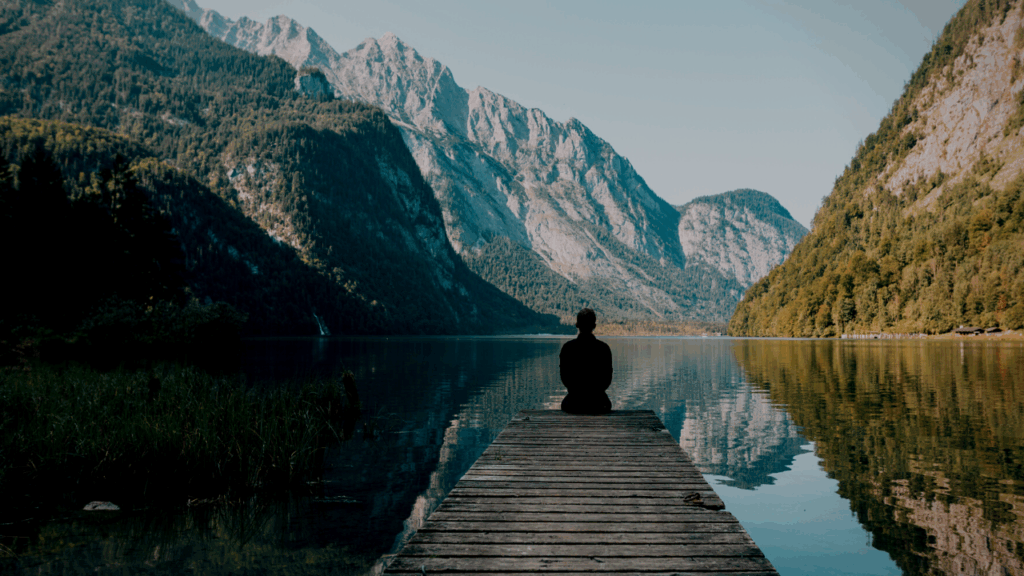
Rather than choosing one between AI and Traditional photography, the photographers are integrating both.
Photographers are continuously experimenting with technology, finding ways to improve their workflow, and integrating the artistic instinct with AI.
Today, everything is about reinvention.
Photographers Using AI as an Enhancement Tool
More and more photographers are starting to use AI as an enhancement tool.
AI can help make the tedious tasks, such as noise reduction, background clean up, exposure, etc, much easier by automatically adjusting them.
There are several tools and software mentioned earlier, too, such as Luminar Neo, Adobe Firefly, etc.
Pure Traditional Photographers Thriving in Niche Markets
No matter the rise in the use of AI, there are still a number of photographers who thrive using the classic methods.
The authenticity of the work, the real feel that the viewers get through the grain of the films, the imperfections, and the emotions.
The traditional photographers thrive by providing the audience with something that is rare today with AI, which is authenticity.
Hybrid Approach: Best of Both Worlds
Today, most photographers also use the best of both worlds.
They capture the images using the manual settings; they shoot in a traditional way.
After shooting manually, the photographers tend to use AI for refinement and editing. The hybrid approach is highly efficient, and there is no compromise in the emotion as well.
Still using manual way to edit your photos??? checkout our latest guide on AI vs Manual Photo Editing: Complete Guide With Real-Life Examples [2026]
What Photography Clients Actually Want Today
In today’s time, no one is concerned about the method that is used to produce the images.
No matter what method is used, whether AI or traditional, what matters is what story is being told.
With time, the tools and the technology must advance, but the soul of photography should remain intact.
A successful photographer is someone who evolves with technology, but the emotions are still there in the work.
The Legal and Ethical Considerations You Must Know

With the advancement in technology and AI, there are also a lot of new concerns that follow, such as authenticity, copyright, and fair use.
Photographers need to understand the legal and ethical dimensions as important it is to master the composition and lighting.
Copyright Issues with AI-Generated Images
The most important matter that comes with the AI photography debate is copyright ownership.
When AI produces the images with a prompt, that is when the matter of ownership becomes unclear.
The images generated by AI are still in the legal grey areas, as the Current intellectual laws in India recognise only human creators as copyright holders.
Hence, due to this grey area, anyone may be able to use the images without any restriction.
Disclosure Requirements for AI Use
Due to the rise in the use of AI, there is a requirement for transparency today.
Nowadays, creators are required to disclose if there is any AI involvement.
The AI-generated work can mislead the audience, and if used in journalism, this can violate the standards.
Stock Photography and AI Content Rules
The stock photography platforms are also adapting to the times and making their policies stricter around the AI-generated visuals.
The platforms are also ensuring that the content is being properly labelled and ethically sourced.
Hence, the uploaders must confirm that no copyrighted data was used in their work.
Real Photographer Perspectives: Survey Results from 500+ Professionals
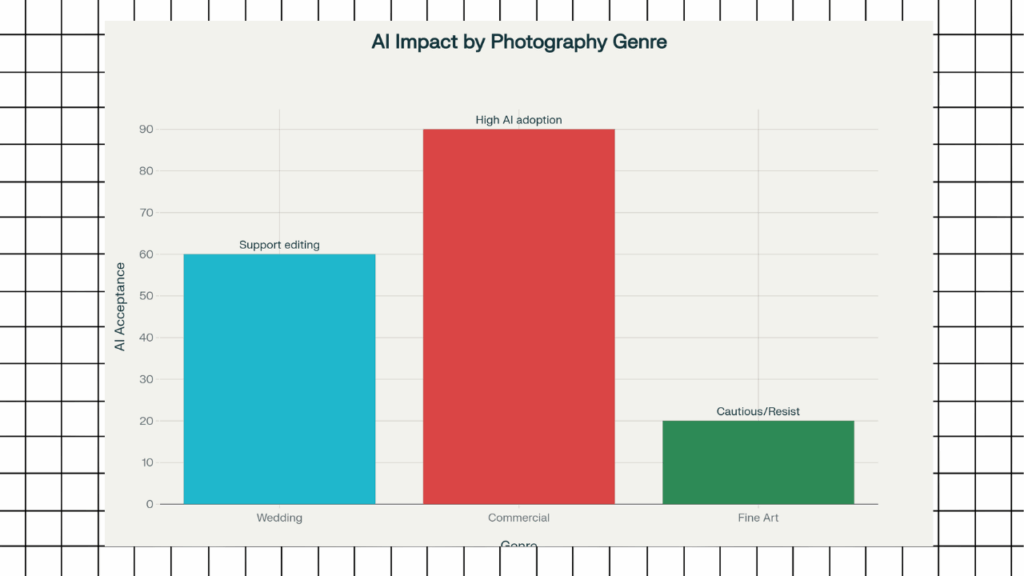
With the survey conducted with over 500 photographers worldwide, it was revealed that there was a range of insights across different genres.
There were mixed reviews, some who see AI as a revolutionary collaborator and others who don’t see the authenticity.
Wedding Photographers on AI Impact
In wedding photographers, most of them have the belief that AI cannot replace the rawness of the moment.
AI can provide efficiency with editing. It can be used as a support system.
Commercial Photographers Embracing AI
Commercial photographers are the ones who are using AI the most among all other genres of photography.
AI is being used to visualise the product concepts, build mockups, and get the campaign faster
Fine Art Photographers Resisting AI
Fine art photographers are the ones who are the most cautious while using AI.
AI can have a great impact on the artistic integrity and even create ownership issues.
According to them, AI can’t replicate human emotions by using code.
Career Implications: Which Path Should You Choose?
Today, with the evolution in technology, photographers are using both traditional methods and AI to make your long-term visions align.
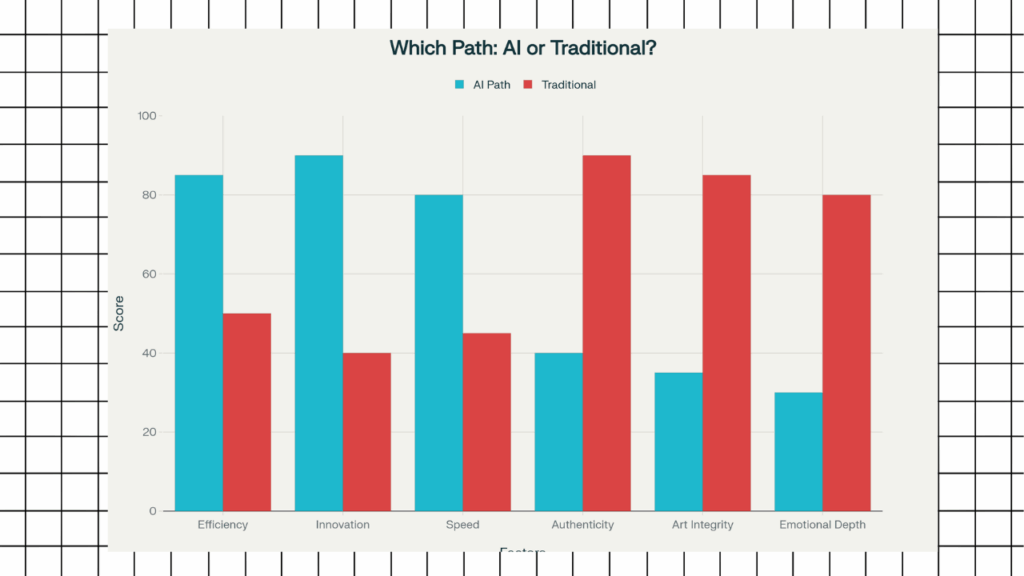
Starting Fresh in Photography: AI or Traditional?
For a photographer who is just starting out traditional photographer must be the foundation.
You first need to understand the basics, compositions, depth, and control.
After that, you can start with AI photography for faster editing.
Existing Photographers: Should You Learn AI?
Yes, the existing photographers should learn to use AI.
It can help you to master the editing and make your work more efficient and strategic as well.
The traditional photographers, after learning AI, can renew their creativity.
The Hybrid Photographer: Combining AI and Traditional Skills
Photographers today are combining both AI and traditional techniques to get the best results possible.
Integrating both of these can help photographers explore ideas and help photographers push the boundaries.
AI for Pre-Visualization and Planning
AI can be used for the generation of mock-ups, experimenting with various compositions, and experimenting with changing the various elements in a photograph.
This can help photographers get a clear idea of the concept and move forward with a clear head.
Traditional Shooting with AI Enhancement
The camera is still at the heart of photography.
Using the camera can help with capturing moments, composition, etc.
Afterwards, AI can be used for enhancement, restoration, efficiency, and much more.
Creating Unique Styles Through Combination
Hybrid photography can lead to the production of images that portray both realism and imagination.
Hybrid photographers can be the new creative leaders as they can blend the precision of technology with the artistic eye.
Frequently Asked Questions: AI vs Traditional Photography
Here are a couple of questions with answer you need to know, if you’re still doubting between these two types of photography…
Will AI completely replace traditional photographers?
No, AI can never fully replace traditional photographers. No matter how evolved it becomes, AI can’t replicate the human touch and emotions.
Can AI-generated images be sold as stock photography??
Yes, they can be sold as stock photography, but with important conditions. AI-generated images can be uploaded, but they are labelled as AI content.
Is AI photography considered “real” photography?
This depends completely on your definition of “real”. AI imagines through data and a prompt, and traditional media captures the reality.
Do professional photographers use AI tools?
Yes, today AI tools are an important part of every photographer’s toolkit. They can be used for editing, retouching, etc.
Which is better for beginners: learning AI or traditional photography?
With respect to beginners, traditional photography is the best way to start out. This can help you understand the basic settings, composition, exposure, lighting, etc.
Can you make money with AI photography in 2026??
Yes, AI can help you earn money faster. AI can help you make money using the digital prints. Brand visuals, etc…
What photography jobs are safest from AI replacement?
Weddings, portraits, and documentary photography are the safest from AI replacement.
Is traditional photography more valuable than AI photography
Yes, traditional photography offers authenticity, emotions, empathy, etc, which are more valuable than AI.
Can AI create better portraits than human photographers?
This is completely subjective. AI can create perfect images, but they lack emotions and authenticity.
Conclusion: The Future Belongs to Adaptive Photographers
As the technology evolves, the best version the integrating the traditional photography with AI.
AI can help photographers test the boundaries and enhance their workflow for photographers, enhance creativity, and edit the images to get the best results.
Traditional photography can maintain the emotions, authenticity, and empathy, and AI can help make the required changes or edits to make it nearly perfect.
In the end, photography is all about the story the photograph tells, not about the technology.
More AI vs Traditional Photography Resources
- 7 Best AI Photography Tools 2026: Tested & Reviewed
- Luminar Neo: Your Path to Professional Photo Editing (AI-based)
- Top 11 AI-Based Photo Editors For Photographers to Try In 2026
- Luminar Mobile Photo Editor Review | AI Features and Mod Myths
- Top 10 Indian Stock Photo Platforms To Try in 2026 [Paid & Free]
- 12 Canva Tools to Master Your Designs (AI Based)
- How to Use AI in Photography Without Losing Your Soul